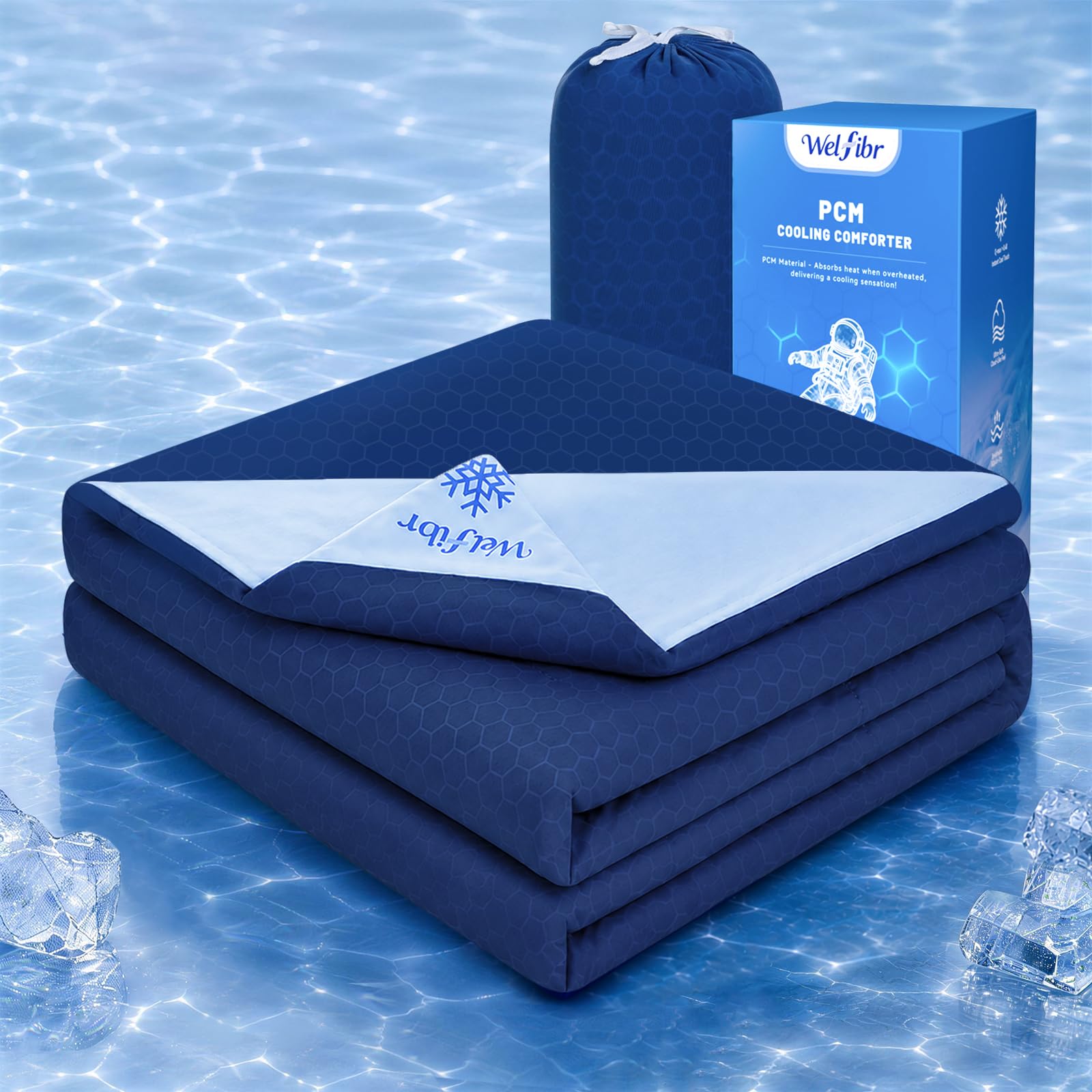
The Welfibr Cooling Blanket for Hot Sleepers is one of those products that sounds more like a science experiment than a bedding upgrade, but after using it in a variety of conditions, it’s clear there’s some genuine engineering here. The blanket uses PCM (phase change material) technology, which is a fancy way of saying it absorbs and releases heat to keep your skin temperature more stable. The Q-Max rating above 0.48 is a measurable indicator of its cooling feel—think of it as a benchmark for how quickly heat moves away from your body. In practice, this means the blanket feels noticeably cool to the touch when you first lay it on, especially in a room that’s not overly warm.
In real-world use, the blanket works best as a light cover for summer nights or for people who run hot year-round. It’s not a heavy comforter, so if you’re used to a thick duvet, this will feel like a thin sheet with a slightly technical texture. The material is a blend of nylon and polyester, which gives it a smooth, almost silky hand feel, but it’s not as breathable as natural fibers like cotton or linen. That’s a trade-off: the cooling effect is real, but the fabric can feel a bit slick against the skin, and it doesn’t wick moisture as aggressively as some moisture-wicking sheets. If you’re a heavy sweater, you might still feel clammy after a few hours, though the PCM does help moderate temperature swings.
One of the standout features is that it’s machine washable. That’s a big plus because many cooling blankets with special coatings or gels can’t be easily cleaned. The Welfibr blanket holds up well to washing—just follow the instructions and avoid fabric softeners, which can gum up the PCM. After several washes, the cooling effect didn’t diminish noticeably, which is a good sign for longevity. However, the blanket is lightweight, so it’s easy to toss around during sleep. If you’re a restless sleeper who kicks off covers, this blanket might end up on the floor more often than a heavier comforter would.
Compared to a traditional cotton blanket or even a basic microfiber throw, the Welfibr offers a more active cooling sensation. Cotton is breathable but doesn’t actively pull heat away—it just lets air pass through. This blanket feels like it’s doing something, which can be a relief on a humid night. But it’s not a miracle worker. If your room temperature is above 80°F, you’ll still feel warm; the blanket just makes it more tolerable. It’s also worth noting that the PCM works best when there’s a temperature difference between your body and the blanket—so if you’re already cold, it won’t warm you up. It’s not a dual-purpose blanket.
Who is this for? It’s a solid choice for hot sleepers who want a dedicated summer blanket without the bulk of a traditional comforter. It’s also good for people who live in warmer climates and need something that can handle a range of temperatures without feeling suffocating. However, it’s not for everyone. If you prefer natural fibers, a heavy weighted blanket, or a truly moisture-wicking material, you might find the Welfibr’s synthetic feel and limited breathability less appealing. It also isn’t ideal for extremely cold sleepers or those who want a blanket that doubles as a decorative throw—it looks functional, not fancy.
Overall, the Welfibr Cooling Blanket delivers on its core promise: it feels cool and helps regulate temperature. The PCM technology is a step above passive cooling fabrics, and the washability adds real convenience. But it has limitations in breathability and texture that some users will notice. If you’re looking for a moderate cooling solution that’s easy to maintain, it’s worth considering. Just don’t expect it to solve all your sleep temperature issues—it’s a tool, not a cure.