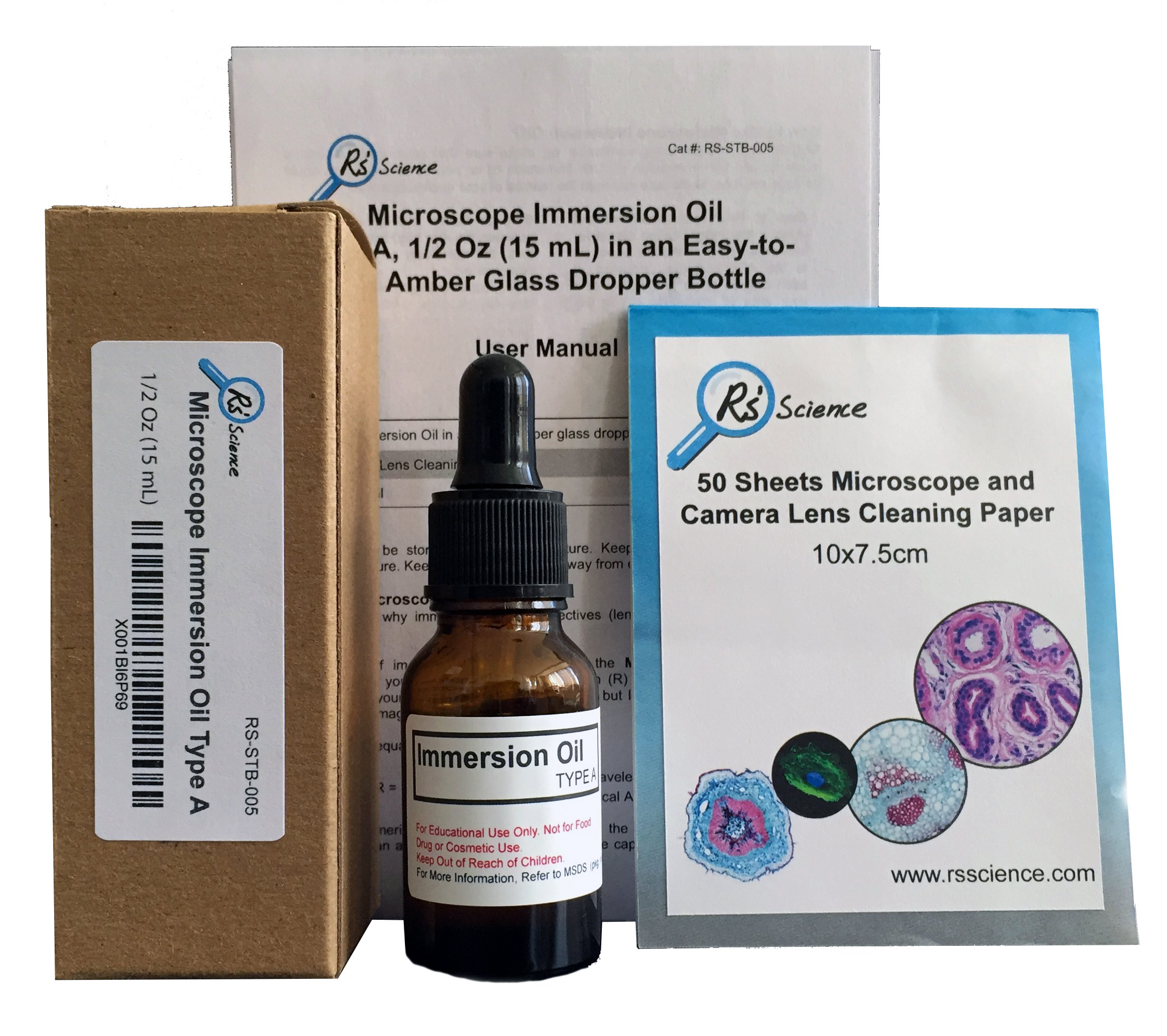
For anyone working with high-magnification microscopy, immersion oil is one of those consumables that tends to get overlooked until you actually need it. The Microscope Immersion Oil Type A in a 1/2 oz (15 mL) amber glass dropper bottle is a straightforward product aimed at a specific task: bridging the gap between the objective lens and the slide to improve resolution at 100x and above. This review looks at how it performs in real lab use, its practical features, and where it might fall short.
The oil itself is a standard Type A formulation, which is the more common choice for routine laboratory work. It has a viscosity that is thin enough to apply easily without forming bubbles, but thick enough to stay in place once the lens makes contact. In practice, this means you can place a single drop on the coverslip, lower the objective, and get a clear, high-contrast image almost immediately. The refractive index is designed to match glass, so the light path remains consistent, reducing the halo effect that can blur fine details. For routine cell counting, bacterial morphology checks, or observing stained tissue sections, this oil does what it needs to do without fuss.
The packaging is a key part of the product. The amber glass dropper bottle protects the oil from light degradation, which is important because some immersion oils can become cloudy or change viscosity if exposed to UV light for long periods. The dropper tip delivers a consistent, small drop—usually one drop is sufficient for a single slide. This is a clear improvement over squeeze bottles that can dispense too much or cause messy spills. However, the 15 mL volume is relatively small. If you are running a busy teaching lab or processing dozens of slides daily, you will likely go through this bottle in a week or two. For occasional use, it can last several months.
One limitation worth noting is the lack of a seal or cap lock. The dropper bottle has a standard screw cap, but it can loosen during transport or if knocked over in a drawer. A few users have reported minor leaks if the bottle is stored on its side. It is best kept upright in a cool, dry place. Also, while Type A oil is suitable for most routine applications, it is not ideal for high-resolution fluorescence work where a low-autofluorescence, non-hardening oil might be preferred. For that, you would need a Type B or a specialized immersion oil.
Compared to generic immersion oils sold in larger plastic bottles, this product offers better control and longer shelf life due to the glass container. Generic oils in plastic bottles are often cheaper per milliliter, but they can degrade faster and are harder to dispense precisely. The dropper bottle design here is a practical middle ground—it is not the most economical for high-volume use, but it is more convenient and reliable for individual researchers or small labs.
Who is this product for? It suits students, technicians, and researchers who need a dependable immersion oil for standard brightfield microscopy. It is also a good choice for anyone who values easy application and minimal waste. On the other hand, it is not the best option for high-throughput labs that go through large quantities of oil daily. In those settings, a larger bottle with a pump dispenser would be more cost-effective. It is also not ideal for specialized microscopy techniques that require oil with specific optical properties.
Overall, this immersion oil performs its core function reliably. The packaging is thoughtful, the oil quality is consistent, and the price is reasonable for the volume. Just be aware of the small size and store it carefully to avoid leaks. If your work involves routine oil-immersion microscopy and you prefer a clean, controlled application, this is a solid choice.