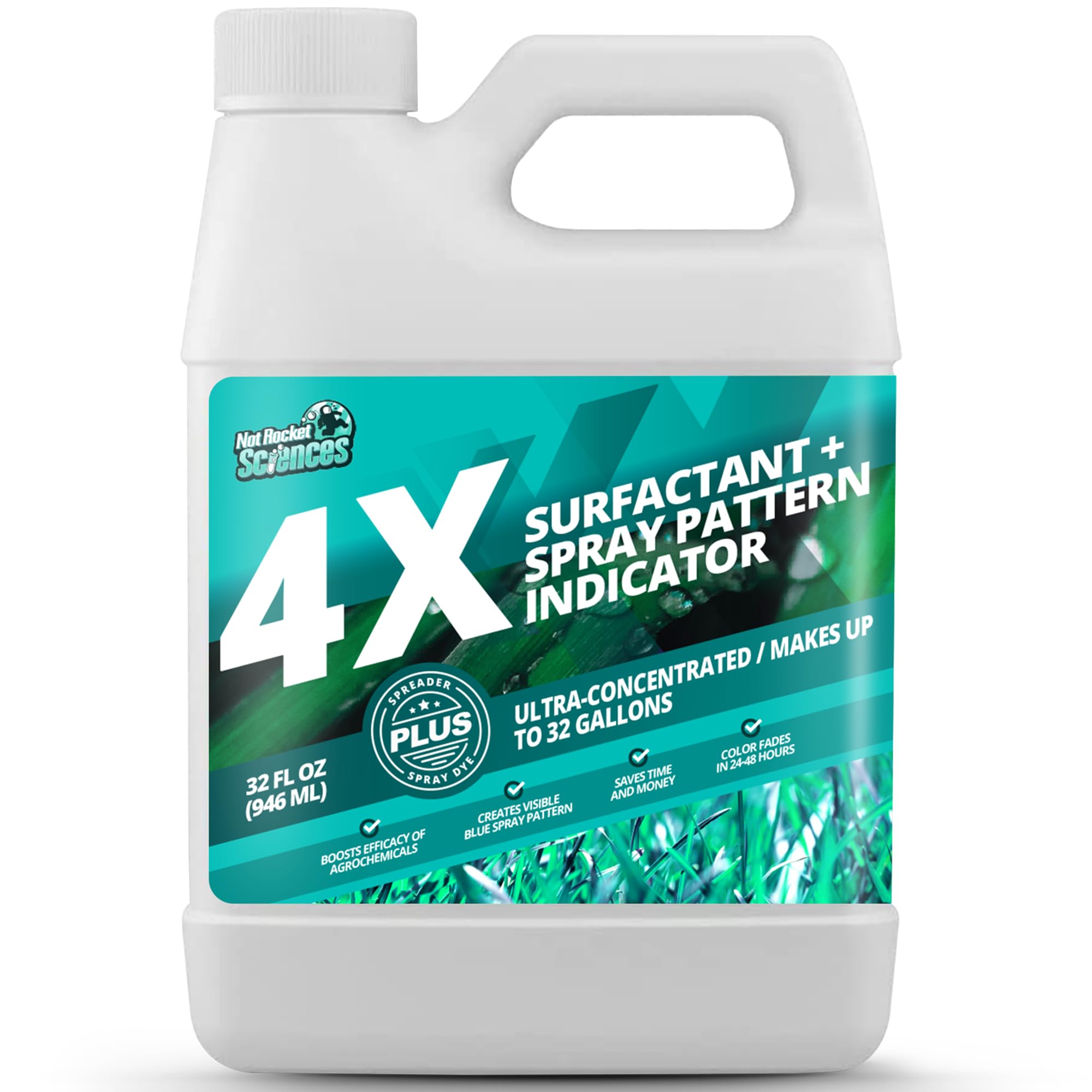
When you’re applying liquid treatments to a lawn, knowing exactly where you’ve sprayed is more important than it might seem. Overlap can burn the grass, while skipping patches leaves uneven results. This 32oz bottle of 4X concentrate combines a blue spray indicator dye with a surfactant, and it’s designed to be mixed with water to make 32 gallons of ready-to-use solution. It’s a tool aimed at professionals and serious DIYers who want to reduce guesswork.
The primary function is straightforward: you add a small amount of this concentrate to your spray tank, and the blue dye marks the turf where you’ve applied the liquid. This visual cue helps you maintain consistent coverage and avoid double-spraying. The surfactant component is meant to reduce surface tension, helping the spray spread and penetrate the grass canopy more evenly. In practice, this means the dye shows up clearly on most grass types, from fescue to Bermuda, though the visibility can vary with lighting and grass density. The blue color is noticeable but not garish; it fades over a few days with sun exposure and mowing, which is a practical feature for residential lawns or commercial properties where long-term staining would be unwelcome.
One of the key strengths here is the concentration ratio. The 4X formula means you use less product per gallon compared to standard 1X or 2X mixes, which extends the bottle’s lifespan. For someone spraying large areas regularly, this can translate to fewer refills and less storage space. The mixing process is simple: you measure the recommended amount—typically around 1 ounce per gallon of water for the 4X strength—and shake it in the tank. It dissolves readily without leaving residue, which is a plus for maintaining sprayer nozzles. However, it’s worth noting that the dye can be tricky to measure precisely if you’re using a small, unmarked container; a graduated measuring cup is helpful.
Where this product falls short is in its performance on extremely dry or hydrophobic soils. The surfactant helps, but if the ground is bone-dry or compacted, the solution may bead up or run off instead of soaking in evenly. In those cases, you might need to pre-wet the area or adjust your application technique. Another limitation is the dye’s longevity in heavy rain. While it’s designed to be temporary, a downpour shortly after application can wash it away, reducing the marking benefit. This isn’t a deal-breaker, but it’s something to plan around if you’re working in unpredictable weather.
Compared to using a generic marker dye without surfactant, this combo product offers a slight edge in spreading efficiency. A simple blue dye will show you where you’ve sprayed, but it may not help the liquid penetrate thatch or thick grass as well. The surfactant additive addresses that gap, making it a more complete solution for turf applications like fertilizers, fungicides, or herbicides. On the other hand, if you’re only spot-treating small areas or using a hose-end sprayer, a basic dye might suffice and cost less. For larger lawns or frequent use, the concentrated surfactant blend justifies the price by saving mixing time and improving coverage consistency.
This product is best suited for lawn care professionals, groundskeepers, or homeowners with large, open turf areas who need reliable marking for broadcast spraying. It’s less ideal for small gardens, potted plants, or indoor use, where the dye could be overkill or the surfactant might not be necessary. If you’re someone who values precision and efficiency in your spraying routine, this is a solid choice. Just don’t expect it to fix underlying soil issues or work perfectly in all conditions—it’s a tool, not a miracle solution. For its intended role, it performs reliably, and the 32-gallon yield from one bottle offers good value for regular users.