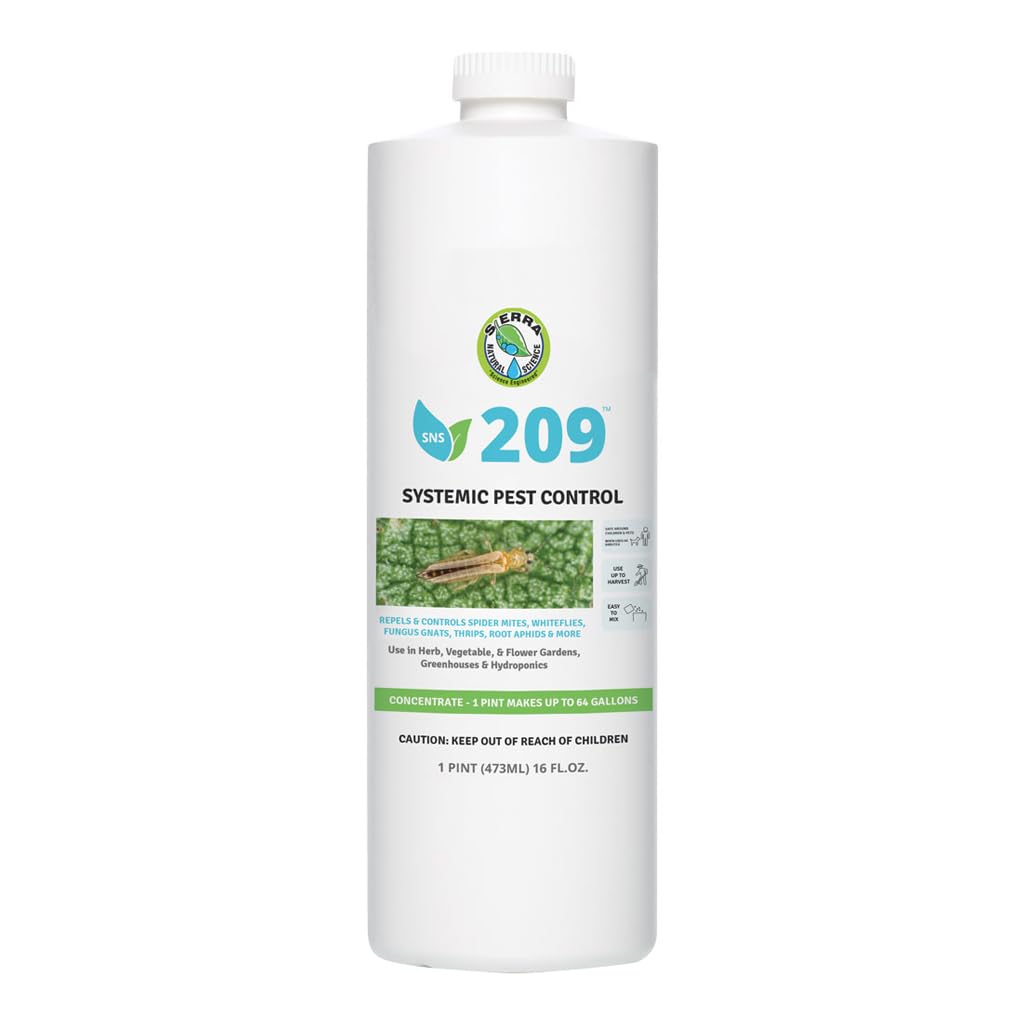
Sierra Natural Science SNS-209 Systemic Concentrate is a liquid concentrate designed to help manage pests on ornamental plants, herbs, and vegetables. Sold in a 1-pint bottle, it is intended to be mixed with water and applied as a soil drench, where it is absorbed systemically by the plant. This approach aims to target pests that feed on plant tissues, such as aphids, spider mites, and whiteflies, without requiring direct contact sprays.
In real-world use, the product is typically applied every 5 to 7 days for active infestations, or as a preventive measure every 2 to 3 weeks. Users mix a small amount (usually 1 to 2 teaspoons per gallon of water) and pour it around the base of the plant. The concentrate itself has a noticeable, somewhat earthy odor, but it is not overpowering. One limitation is that it does not provide instant knock-down of pests; it works gradually as the plant takes up the active ingredient (rosemary oil) and becomes unpalatable to insects. This means patience is required, and it may not be ideal for severe, fast-moving infestations where immediate control is needed.
Key functional features include its systemic action, which can protect new growth that sprays might miss, and its relatively low toxicity to bees and other beneficial insects when used as directed, since it is not sprayed on flowers. However, it is important to note that it can still affect pollinators if they come into contact with treated plant residues, so careful timing of application is advised. The product is OMRI-listed for organic use, which is a plus for those seeking non-synthetic options.
Compared to standard insecticidal soaps or neem oil sprays, SNS-209 offers a different mode of action. Sprays require thorough coverage of leaves and stems, which can be labor-intensive on large plants. The systemic approach of SNS-209 simplifies application but sacrifices speed. For example, a neem oil spray might kill aphids on contact within hours, whereas SNS-209 may take several days to reduce feeding damage. Users who need rapid results might prefer a combination of both methods.
Who is this product suitable for? It works well for gardeners who want a low-effort, ongoing pest management strategy, especially for houseplants, greenhouse crops, or outdoor ornamentals where spraying is inconvenient. It is also a reasonable choice for those focusing on organic gardening and wanting to minimize foliar residues. Who is it not suitable for? It is not a good fit for emergency pest outbreaks or for growers with very small plants where soil drenching could lead to overwatering. Additionally, it may not be effective against all pest types; for instance, it does little for caterpillars or beetles that chew leaves directly, since the systemic effect is more about deterring sap-feeders.
Performance expectations should be realistic. Users report moderate success with consistent use, but it is not a miracle cure. Some pests may still persist, especially if the infestation is well-established. The concentrate is also relatively expensive compared to simpler spray options, though a pint goes a long way due to the low dilution rate. Overall, SNS-209 is a solid tool to have in a pest management rotation, but it works best as part of an integrated approach that includes monitoring, sanitation, and occasional spot treatments.
In summary, this systemic concentrate offers a convenient, organic-friendly way to manage certain plant pests, but it requires patience and realistic expectations. It is not a substitute for quick-acting treatments, and its effectiveness varies by pest and plant type. For those willing to incorporate it into a broader care routine, it can reduce pest pressure without the hassle of frequent spraying.