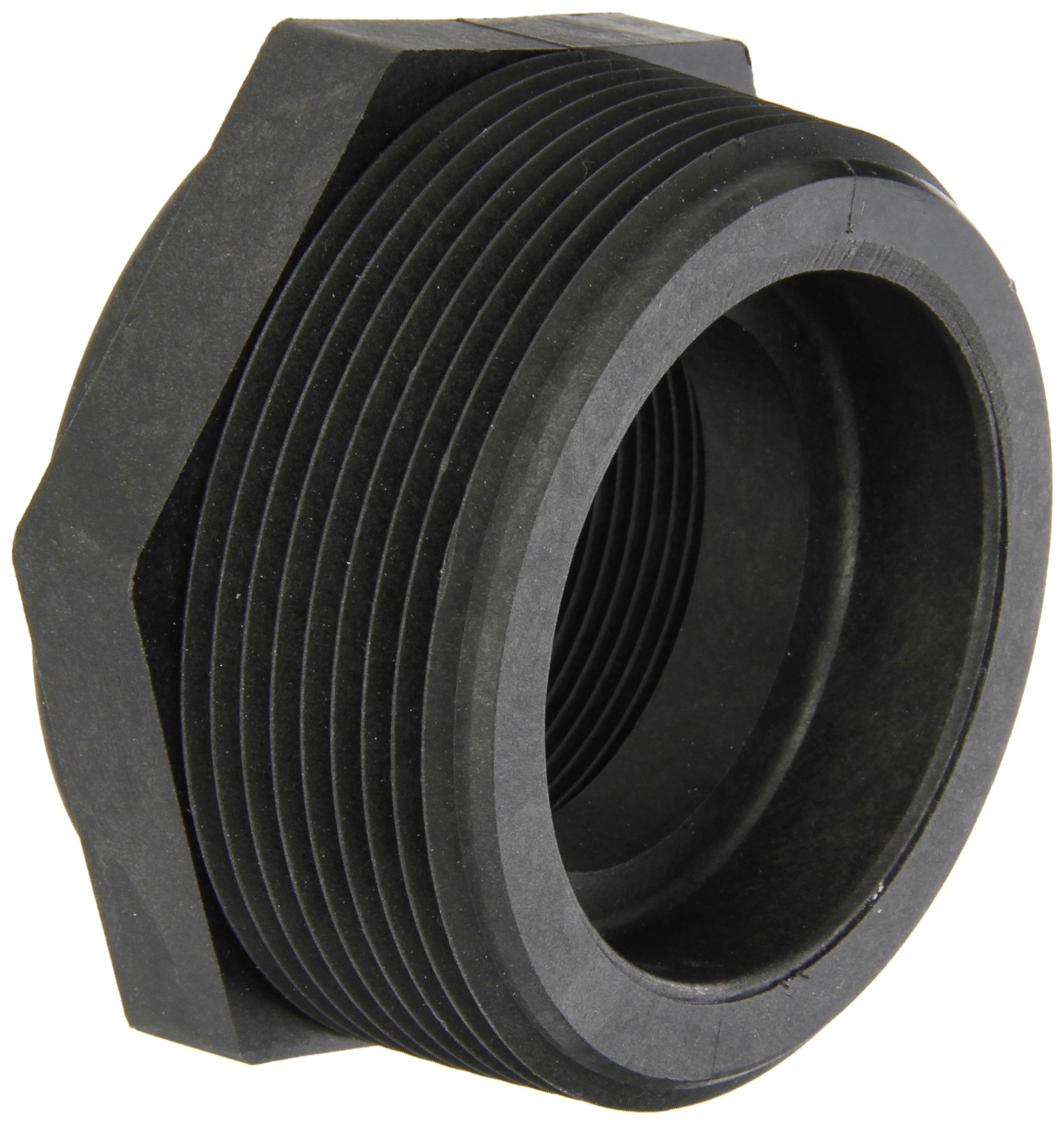
When working with polypropylene pipe systems, fittings like the Banjo RB300-200 reducing bushing often go unnoticed until you need one. This component connects a 3-inch male NPT (National Pipe Thread) to a 2-inch female NPT, effectively stepping down pipe size in a schedule 80 system. It’s a straightforward piece of hardware, but its performance in real-world conditions reveals more than just its specs.
The bushing is molded from polypropylene, a thermoplastic known for its chemical resistance and durability in non-pressurized or low-pressure fluid handling. In practice, this fitting is commonly used in water treatment plants, chemical processing facilities, or industrial plumbing where corrosive fluids are involved. The schedule 80 rating means thicker walls compared to schedule 40, offering better mechanical strength and thermal stability, though it still has limits under high pressure or temperature extremes.
Key functional features include the tapered NPT threads on both the male and female ends, which allow for a tight seal when combined with thread sealant or PTFE tape. The male end screws into a larger 3-inch female port, while the female end accepts a 2-inch male pipe or fitting. The material is UV-stabilized to some degree, but prolonged outdoor exposure without protection can lead to degradation over time—a trade-off common with many plastics. The bushing also resists a wide range of chemicals, including acids and bases, making it suitable for aggressive environments where metal fittings might corrode.
One limitation worth noting is the fitting’s performance under high-temperature conditions. Polypropylene typically softens above 180°F (82°C), so this bushing is not ideal for hot water or steam applications. Additionally, the threads can be prone to galling if over-tightened, especially with metal wrenches, since the plastic is softer than metal. Using a backup wrench on the male end is advisable to avoid twisting the bushing out of shape. Another point: the reducing bushing design inherently creates a flow restriction, which is fine for many applications but could be a concern in systems requiring minimal pressure drop.
Compared to alternatives like PVC or CPVC reducing bushings, the polypropylene version offers better chemical resistance, especially against solvents and hydrocarbons that can attack PVC. However, PVC is often cheaper and more readily available for general water systems. For metal pipe systems, a brass or stainless steel bushing would handle higher temperatures and pressures, but at a higher cost and with potential galvanic corrosion issues when paired with certain materials. The Banjo RB300-200 sits in a middle ground: it’s a reliable choice for chemical service where metallic corrosion is a problem, but it’s not a universal solution.
Who is this product for? It suits facility maintenance teams, chemical plant engineers, or DIYers working on specialized irrigation or wastewater systems that involve corrosive fluids. It’s also appropriate for those needing a quick size reduction in a polypropylene line without adding extra joints. Who should avoid it? Anyone dealing with high-temperature fluids, high-pressure systems above the material’s rating, or applications requiring frequent assembly and disassembly—since the threads can wear over time. Also, if you need a flush internal diameter for smooth flow, this bushing’s stepped design may not be ideal; a reducing coupling or eccentric reducer might be better.
In terms of build quality, the bushing feels solid for a plastic fitting, with no visible flash or rough edges on the threads. The material has a slight translucency typical of polypropylene, and the threads are well-formed, though they are not as sharp as those on machined metal fittings. It’s a utilitarian part that does its job without fanfare. Just be realistic about its limitations: it’s a plastic fitting in a plastic system, not a heavy-duty metal replacement. For the right application, it’s a dependable, cost-effective solution.